Introduction to AI Automation in Business
Artificial Intelligence (AI) automation is redefining the landscape of business operations by introducing advanced technologies that reduce human intervention in repetitive tasks. At its core, AI automation utilizes algorithms and software to perform processes that traditionally required human intelligence. This includes tasks such as data entry, customer service interactions, and even complex decision-making functions across various industries.
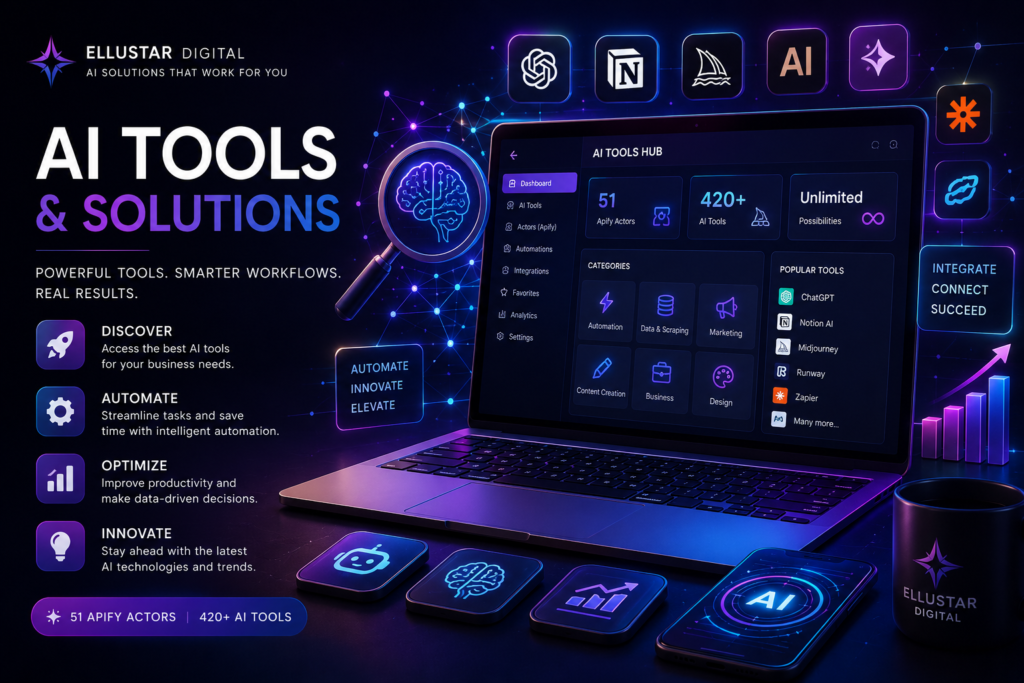
As businesses encounter growing demands and the necessity for increased productivity, AI automation emerges as a critical solution. By integrating AI-driven tools into business workflows, organizations can streamline operations, enhance accuracy, and allocate resources more effectively. The capacity of AI to analyze vast amounts of data far surpasses that of humans, allowing for rapid and informed decision-making that can propel a business toward greater efficiency.
The relevance of AI automation is underscored by its ability to address common pain points within organizations, such as the need for consistent quality and faster turnaround times. By automating mundane tasks, companies not only improve operational efficiency but also enable their workforce to focus on higher-value activities. This shift leads to innovative solutions and improved customer satisfaction, which are essential for scaling businesses in a competitive market.
Furthermore, AI automation significantly contributes to reducing operational costs. By decreasing the time spent on manual processes, businesses can reallocate financial resources to strategic initiatives that foster growth. It also offers the potential for real-time insights and predictive analytics which can inform business strategies and adapt to changing market conditions quickly.
The Benefits of Implementing AI Automation
In today’s fast-paced business environment, implementing AI automation has become an essential strategy for organizations looking to scale efficiently and effectively. The advantages of integrating AI-driven technologies are manifold, starting with significant cost savings. By automating routine tasks, businesses can reduce the need for extensive human labor, thereby decreasing operational expenses. This allows companies to allocate resources more strategically, potentially increasing their investment in areas that drive growth.
Another notable benefit of AI automation is the increase in productivity. Automation tools can handle repetitive and time-consuming tasks with remarkable speed and efficiency. This not only allows employees to focus on more complex and value-added work but also accelerates processes—from customer service inquiries to inventory management. As a result, businesses can see a significant boost in overall output, enabling them to meet market demands more rapidly.
Accuracy is yet another critical advantage associated with AI automation. Human error is often a factor in manual processes, leading to inconsistencies and costly mistakes. AI systems, utilizing machine learning algorithms, are designed to learn and adapt over time, ensuring that tasks are performed with enhanced precision. This accuracy translates into improved product quality and a reduction in errors that could impact customer satisfaction.
Moreover, AI automation enhances customer experiences. Personalized service, quick response to inquiries, and efficient handling of transactions driven by AI capabilities lead to heightened customer satisfaction and loyalty. As customers receive faster and more tailored interactions, businesses emerge as industry leaders, benefiting from an increased customer base and enhanced brand reputation. Collectively, these benefits of AI automation illustrate its potential in driving scalable growth for businesses across various sectors.
Common Areas Where AI Automation Can Be Applied
AI automation is transforming numerous aspects of business operations, providing organizations with the means to enhance efficiency and scale rapidly. Here are some prevalent areas where AI automation can be effectively implemented:
Customer Service: One of the most visible applications of AI automation is within customer service. Companies are increasingly deploying AI chatbots to handle customer inquiries, thereby providing instant responses 24/7. These chatbots can resolve common issues, answer FAQs, and guide users through processes, all of which free up human agents to tackle more complex tasks. The integration of AI in customer service not only improves response times but also enhances customer satisfaction.
Marketing: AI automation is reshaping marketing by enabling businesses to create automated campaigns tailored to target audiences. With data analysis, AI systems can predict customer behavior and preferences, allowing companies to send personalized emails or messages during optimal times. Tools like AI-driven analytics platforms help marketers optimize their strategies and measure the effectiveness of campaigns, leading to improved ROI.
Supply Chain Management: In supply chain logistics, AI automation plays a crucial role in optimizing operations. Businesses can utilize AI algorithms to forecast demand, manage inventory, and streamline distribution processes. By analyzing real-time data, AI helps companies minimize costs, reduce waste, and predict supply chain disruptions, thus maintaining efficiency and ensuring timely delivery of products.
Finance: The finance sector is also benefiting from AI automation through automated bookkeeping and reporting systems. These AI tools can handle tasks such as invoice processing and financial analysis, which reduces the likelihood of human errors and accelerates data processing. The automation of these routines allows finance professionals to focus on strategic decision-making, promoting organizational growth.
Choosing the Right AI Automation Tools for Your Business
In the rapidly evolving landscape of technology, selecting the right AI automation tools for your business can significantly influence your operational efficiency and overall growth. The first step in this journey is to clearly define your business objectives. Understanding whether you need tools for customer service automation, analytics, or workflow optimization will guide your selection process.
Once you have your goals outlined, consider scalability as a critical factor. It is essential to choose AI tools that can grow alongside your business. Look for platforms that offer customizable solutions and features, allowing for adjustments as your needs evolve. This scalability ensures that your investment in AI automation remains relevant over time, avoiding the need for frequent and costly upgrades.
Integration capabilities are another vital aspect to consider. Your chosen AI automation tools should seamlessly integrate with your existing systems, such as CRM, ERP, or any other software currently in use. This compatibility minimizes disruption during implementation and supports a more efficient workflow. To facilitate this process, consider vendors that provide comprehensive support and resources for integration.
Moreover, cost-effectiveness cannot be overlooked. Conduct a thorough analysis of the total cost of ownership, which includes initial setup costs, ongoing maintenance fees, and any additional expenses related to necessary training. Comparing different vendors not only helps in understanding pricing but also provides insights into the value each solution offers.
Lastly, leverage demo versions or free trials to evaluate the user experience and functionality of the AI automation tools before making a long-term commitment. This hands-on experience allows you to assess whether a tool aligns with your specific requirements and company culture.
Case Studies: Successful Implementation of AI Automation
In today’s business landscape, many organizations have harnessed the power of AI automation to achieve significant operational efficiencies and scale. Understanding the strategies employed by these organizations can provide valuable insights for businesses considering similar implementations.
One notable example is Company A, a leading logistics firm that faced challenges with route optimization and delivery efficiency. By integrating AI-powered algorithms into their routing systems, they were able to analyze vast amounts of data in real time. This allowed them to dynamically adjust routes based on traffic conditions and customer demands. As a result, Company A reported a 20% reduction in delivery times and a corresponding increase in customer satisfaction rates. The initial challenge was the resistance from staff, but with effective training and change management strategies, they successfully transitioned to the new automated system.
Another impressive case comes from Company B, a retail giant that struggled with inventory management. They implemented an AI-based inventory management system that utilized predictive analytics to forecast demand accurately. This technology helped them identify trends and adjust inventory levels accordingly, leading to a 30% decrease in overstock and out-of-stock situations. Company B faced challenges in integrating this system with their existing ERP software, but through collaboration with their IT department and the software provider, they achieved a seamless integration.
A third case study worth noting is Company C, a financial services provider that automated its customer service through AI chatbots. These chatbots handled a significant volume of customer queries, allowing human agents to focus on more complex issues. The deployment led to a 40% reduction in response times and increased operational efficiency. The initial challenge was ensuring that the AI systems could understand and respond accurately to customer inquiries, which was resolved through extensive testing and iterative improvements.
These examples illustrate that, although challenges may arise during the implementation of AI automation, the potential benefits—such as improved efficiency, customer satisfaction, and cost reductions—are substantial. As companies continue to explore AI technologies, such successful case studies will serve as benchmarks for effective strategies and practices in automation.
Challenges and Considerations in AI Automation
Implementing AI automation in business processes can be a transformative decision, but it is not without its challenges. One significant concern is data privacy, as the integration of AI often requires access to large sets of personal and sensitive information. Organizations must ensure compliance with regulations such as GDPR and HIPAA to protect customer data from potential breaches. Failing to prioritize data security can lead to severe financial penalties and irreparable harm to a company’s reputation.
Another critical consideration is the necessity for a skilled workforce. The introduction of AI technologies requires employees who are not only familiar with the new systems but also capable of managing and optimizing them. This may necessitate investment in training programs or hiring new talent with specialized skills in machine learning, data analysis, or IT infrastructure. Without a knowledgeable workforce, the full potential of AI automation may not be realized, limiting the benefits to the business.
Moreover, resistance to change can present hurdles when implementing AI solutions. Employees may fear job loss or feel overwhelmed by the prospect of adopting new technologies. To mitigate this resistance, organizations must foster a culture that embraces innovation and demonstrates the benefits of AI automation. Transparent communication about the role of AI in enhancing productivity, rather than replacing human effort, can alleviate concerns and promote a more optimistic outlook on technological integration.
Lastly, businesses must ensure that their strategic goals align with AI initiatives. Automation should be seen not as a standalone solution but as part of a comprehensive strategy that enhances operational efficiency and customer satisfaction. Addressing these challenges requires careful planning and a proactive approach, ensuring that AI automation is implemented effectively and sustainably.
The Future of AI Automation in Business Scaling
The role of AI automation in business scaling is poised for significant transformation in the coming years. As advancements in technology gain momentum, companies are increasingly leveraging artificial intelligence to streamline operations, enhance decision-making, and ultimately drive growth. Emerging technologies such as natural language processing and computer vision are expected to become commonplace, allowing businesses to automate more complex tasks with greater accuracy and efficiency.
One prominent trend is the integration of machine learning algorithms into business processes. These algorithms enable systems to learn from data patterns and adapt over time, which is crucial for organizations aiming for scalability. For instance, predictive analytics, supported by AI, can help businesses forecast trends, optimize inventory, and improve customer engagement. Consequently, companies can make informed strategic moves, ensuring sustainable growth in competitive markets.
Moreover, as AI technology continues to evolve, its capabilities will expand beyond basic automation. We can anticipate innovations in autonomous systems that require minimal human intervention, facilitating processes such as supply chain management and customer service. Augmented reality (AR) and virtual reality (VR) integrations into AI tools may further enrich customer experiences, making service offerings more engaging and interactive.
To prepare for this evolving landscape, businesses must remain vigilant and agile. Investing in staff training on AI technologies and promoting a culture of innovation will be critical. Additionally, organizations should consider partnerships with tech firms specializing in AI advancements, allowing them to stay ahead of industry trends and competitor strategies. Businesses that proactively embrace these developments will position themselves favorably to leverage AI automation for scalable growth.
Best Practices for Integrating AI Automation
Integrating AI automation into business processes is a transformative initiative that can significantly enhance efficiency and productivity. However, to ensure a smooth transition, organizations must adopt certain best practices that facilitate successful integration.
One of the primary steps in this process is to invest in comprehensive training for staff. Employees are the backbone of any organization, and their adeptness at using AI tools is crucial. Training programs should focus not only on the technical aspects of AI applications but also on how these tools can augment their roles. By empowering staff with knowledge and skills, businesses can create a culture that embraces AI automation and maximizes its benefits.
Another essential practice is implementing AI solutions gradually. A phased approach enables businesses to minimize disruptions while integrating new technologies. Starting with pilot projects allows staff to familiarize themselves with the systems and provides invaluable insights into potential challenges. These insights can be used to optimize the AI tools before full-scale deployment. Gradual implementation also ensures that the organization can adapt to changes smoothly without risking operational continuity.
Additionally, continuous monitoring of AI performance is vital for assessing its impact on business processes. By setting up metrics to evaluate the effectiveness of automation, organizations can make data-driven decisions about adjustments and improvements. This ongoing assessment allows businesses to remain agile and responsive to both the capabilities of AI systems and the evolving needs of the market. Regularly revisiting and refining the use of AI automation ensures it stays aligned with organizational goals and supports consistent growth.
In conclusion, integrating AI automation into business processes requires a thoughtful approach. By prioritizing staff training, opting for gradual implementation, and committing to continuous performance monitoring, businesses can harness the full potential of AI technology and drive sustainable growth.
Conclusion: Embracing AI Automation for Growth
As businesses continue to navigate the complexities of the modern market, the role of AI automation has become exceedingly critical. Throughout this discussion, we have explored the various ways that AI automation streamlines operations and enhances efficiency, enabling companies to scale their processes effectively and swiftly. From automating mundane tasks to providing insightful data analytics, AI presents an array of tools that businesses can leverage to optimize performance.
One of the standout advantages of AI automation is its capacity to minimize human error while maximizing productivity. By integrating AI-driven solutions, businesses can allocate human resources to more strategic tasks, thus allowing for innovation and growth. Moreover, AI technologies can process vast amounts of data in real-time, providing organizations with the agility to make informed decisions promptly, which is essential in fast-paced environments.
AI automation also facilitates improved customer interactions, enhancing the overall user experience. With personalized services and efficient handling of inquiries, businesses can build stronger relationships with their clients and improve satisfaction rates. As organizations adopt these technologies, they not only enhance their operational capabilities but also position themselves competitively in their respective markets.
Given these benefits, it is imperative for companies of all sizes to consider incorporating AI automation into their workflows. The potential for growth, efficiency, and innovation is significant, making it a valuable investment for the future. As we conclude, we encourage readers to explore the various AI tools available, assess their applicability to their operations, and embrace a transformative approach to business growth. The path ahead is not only about adopting new technologies but also about harnessing them to achieve remarkable success.