Introduction to AI Booking Assistants
AI booking assistants are innovative tools that leverage artificial intelligence to streamline and enhance the booking process for businesses across various industries. These virtual assistants are designed to handle a multitude of tasks associated with scheduling and managing appointments, reservations, and even transactions, effectively reducing the workload for human staff. By utilizing natural language processing and machine learning technologies, AI booking assistants can interact with customers, understand their preferences, and provide timely responses, thereby improving overall customer experience.
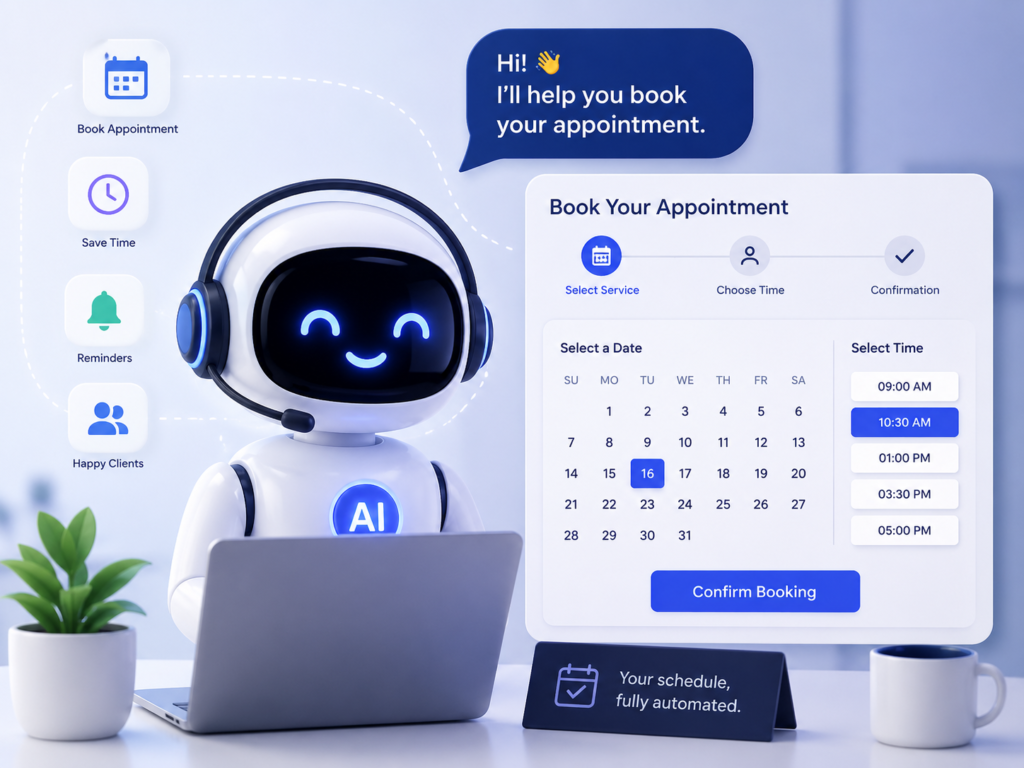
One of the primary functions of an AI booking assistant is to automate the entire booking lifecycle. This includes receiving inquiries, checking availability, confirming bookings, and sending reminders to both customers and service providers. The ability to operate 24/7 allows businesses to cater to clients at any time, breaking geographical barriers and time constraints. Moreover, these systems can be integrated with existing software platforms, enabling seamless data exchange and enhancing operational efficiency.
As businesses worldwide seek to optimize their operations, the adoption of AI booking assistants has become more prevalent. The growing demand for personalized customer service, combined with the necessity for increased productivity, positions these tools as indispensable assets. Furthermore, the ability to analyze booking patterns and customer feedback allows businesses to make informed decisions and tailor services to meet the evolving needs of their clientele.
In light of the emerging trends in automation and AI, understanding the mechanisms and advantages of AI booking assistants is crucial for businesses that aim to remain competitive. Their capacity to enhance efficiency while providing superior customer service makes them a vital investment for any organization looking to thrive in a digitalized environment.
Time-Saving Benefits of AI Booking Assistants
In today’s fast-paced business environment, efficient time management is crucial for success. AI booking assistants have emerged as invaluable tools, enabling companies to streamline scheduling, appointments, and handle inquiries with remarkable efficiency. By automating these processes, AI booking assistants significantly reduce the time that employees spend on administrative tasks, allowing them to concentrate on more strategic and higher-value initiatives.
According to a recent study by Forrester Research, businesses that implement AI-driven solutions for scheduling can enhance their productivity by up to 30%. This improvement stems from the ability of AI booking assistants to handle a wide array of inquiries and schedule appointments autonomously. For instance, a small business utilizing an AI booking assistant saw a 50% reduction in appointment booking time within the first month of adoption, directly reflecting on employee availability to engage in more productive work.
Additionally, consider the case of a medium-sized enterprise that incorporated an AI booking solution across its customer service division. The implementation resulted in a staggering 70% decrease in time spent managing appointment requests. Staff members noted that they could redirect their focus from routine scheduling to engaging with clients and enhancing service quality. This shift is particularly beneficial in industries like healthcare or hospitality, where managing appointments and inquiries efficiently can significantly impact customer satisfaction.
Ultimately, AI booking assistants not only serve as efficient scheduling tools but also contribute to enhanced productivity across various business sectors. The ability to automate routine tasks allows staff to dedicate their skills and time to more critical functions, ensuring that overall operational efficiency is maximized. As businesses continue to embrace technology, the role of AI booking assistants will undoubtedly become even more central to achieving optimal time management.
Enhancing Customer Experience with AI Technology
In today’s fast-paced digital landscape, customer expectations have evolved significantly. Consumers now anticipate immediate responses and round-the-clock access to services, which can often be challenging for businesses to provide. This is where AI booking assistants come into play, redefining customer experience by offering 24/7 support, personalized recommendations, and streamlined booking processes.
AI booking assistants are equipped with advanced algorithms and machine learning capabilities that enable them to operate continuously without interruption. This availability allows customers to book services and seek assistance at any time, catering to their needs and preferences regardless of business hours. As a result, businesses can enhance their overall service quality and reduce customer frustration associated with delayed responses.
Moreover, AI technology allows for the analysis of customer data, which helps create tailored recommendations. By understanding individual preferences and past booking behaviors, AI booking assistants can suggest relevant options, such as specific travel packages, restaurants, or appointments. This personalized touch not only improves customer satisfaction but also increases the likelihood of returning clients as they feel valued and understood.
The seamless booking process facilitated by AI technology further adds to its appeal. Customers can navigate through options easily, receive confirmations instantly, and even modify their bookings with minimal effort. Such an efficient booking system not only meets the expectations of today’s consumers but also fosters loyalty by ensuring a hassle-free experience.
In conclusion, leveraging AI booking assistants can significantly enhance customer experience. By addressing the crucial elements of accessibility, personalization, and efficiency, businesses can better align with consumer demands in an increasingly competitive market. The integration of this technology not only improves customer satisfaction but can also lead to increased business efficiency and growth.
Cost-Effectiveness of Implementing AI Booking Solutions
In the current fast-paced business environment, the incorporation of AI booking assistants presents significant cost-effectiveness opportunities for businesses across various sectors. AI booking solutions streamline the scheduling process, allowing organizations to reduce staffing costs significantly. Instead of maintaining large teams of administrative personnel to manage bookings, companies can deploy AI systems that operate 24/7, handling a multitude of inquiries simultaneously. This shift not only ensures a more efficient allocation of human resources but also results in substantial savings in payroll expenses.
For instance, consider a hotel chain that implemented an AI booking assistant. Prior to its adoption, the hotel employed multiple staff members solely for booking inquiries, which generated high labor costs. After the implementation of the AI solution, the hotel saw a 30% reduction in staffing needs related to booking operations. In addition to the decreased labor costs, the AI system increased booking efficiency, enabling the hotel to manage guest reservations more swiftly and accurately. This efficiency contributed to improved customer satisfaction, with guests experiencing less waiting time for responses.
Another notable example is a small travel agency that integrated an AI booking assistant into its operations. By automating the booking process, the agency not only enhanced its service delivery but also unlocked the potential for increased bookings. The result was a 40% rise in their bookings within three months, demonstrating a direct return on investment. Such outcomes underscore the economic advantages of AI booking solutions, as they not only cut costs associated with human resources but also drive revenue growth by optimizing production workflows. Companies that embrace AI technology in their booking systems can expect to witness significant financial benefits, making it a strategic investment for the future.
Integrating AI Booking Assistants with Existing Systems
In the contemporary business landscape, the integration of AI booking assistants with existing business management systems such as Customer Relationship Management (CRM) and Enterprise Resource Planning (ERP) systems is essential for creating a seamless operational environment. Companies are increasingly recognizing the value of combining AI capabilities with their traditional systems. This fusion enhances productivity and elevates customer service levels.
Incorporating AI booking assistants into ERP systems enhances workflow efficiency. The AI assistant can automate tasks such as inventory management, resource allocation, and financial tracking. This level of automation not only reduces human error but also ensures more accurate forecasting and planning across different departments.
However, integrating AI booking assistants into existing systems does present challenges. Businesses may encounter issues related to compatibility, data consistency, and employee resistance to new technology. To effectively overcome these obstacles, it is crucial to conduct a comprehensive analysis of the existing systems and identify potential integration points. A phased approach can be employed, allowing for incremental updates while minimizing disruptions.
Furthermore, training sessions and continuous support should be provided to employees, ensuring they are well-equipped to utilize the new technology effectively. By addressing these challenges head-on, organizations can achieve a cohesive operational environment that leverages the efficiency of AI booking assistants while maintaining the reliability of their existing systems.
AI in Multiple Industries: Use Cases and Applications
The integration of artificial intelligence (AI) booking assistants into various industries has revolutionized the way businesses operate. These intelligent systems streamline processes, optimize resource allocation, and enhance customer experiences. The hospitality sector, for instance, leverages AI booking assistants to provide seamless reservation management. Hotels like Marriott International utilize AI to assist customers with room bookings, making recommendations based on preferences and past behaviors, ultimately leading to improved customer satisfaction.
In the healthcare industry, AI booking assistants are transforming appointment scheduling. Medical facilities are adopting these systems to reduce no-show rates and manage patient flow efficiently. For example, the Cleveland Clinic has implemented an AI-based scheduling tool that helps patients book appointments with the right specialists while considering their medical history and preferences. This not only saves time for both patients and healthcare providers but also increases the overall efficiency of healthcare services.
The services industry has also embraced AI booking solutions, particularly in sectors like beauty and wellness. Salons and spas are employing AI assistants to facilitate appointment scheduling, allowing clients to effortlessly select service types and timings that suit their schedules. A notable example is Booksy, a platform that utilizes AI technology to connect clients with beauty professionals, enhancing the booking experience for all parties involved.
Furthermore, the travel industry is making significant strides with AI booking assistants, enabling personalized travel planning. Platforms like Expedia employ AI to assist users in finding and booking flights, hotels, and activities tailored to their personal preferences. Such advancements not only elevate the user experience but also improve operational efficiency within the travel sector.
Clearly, AI booking assistants are making substantial impacts across various sectors, demonstrating their versatility and effectiveness in streamlining operations and enhancing customer service.
Maintaining Personal Touch in an AI Environment
The integration of AI booking assistants into business operations has revolutionized customer service and operational efficiency. However, a prevalent concern among businesses and customers alike is the potential loss of human interaction. The effectiveness of AI technology in streamlining operations must not overshadow the vital need for maintaining a personal touch. Striking a balance between automation and personalization is essential for fostering strong customer relationships and ensuring high satisfaction levels.
To address these concerns, businesses can implement several strategies. Firstly, a hybrid approach that combines AI capabilities with human oversight is effective. For instance, while AI can handle routine inquiries or bookings, having a human available for more complex or sensitive issues adds a layer of reassurance and empathy. This method not only leverages the efficiency of AI but also retains the personal connection that many customers value.
Secondly, customization is key. Many AI booking assistants can be programmed to incorporate customer preferences learned from previous interactions. By using this data intelligently, businesses can create a more tailored experience that resonates personally with customers. Sending personalized follow-up messages post-booking or acknowledging a customer’s past preferences demonstrates attentiveness and enhances the feeling of being valued.
Moreover, ensuring transparency in AI interactions is crucial. Customers are often more comfortable with AI references if they know they are interacting with an assistant and not a human being. An explicit acknowledgment of AI’s role can pave the way for acceptance while allowing businesses to emphasize that human support remains readily available as needed. This openness helps in building trust.
Ultimately, while AI booking assistants provide businesses with unmatched efficiency, maintaining a balance that emphasizes human connections is essential. This balance not only enhances customer experience but also fosters loyalty, ensuring that the digital transformation enhances, rather than detracts from, the personal touch that is critical in today’s competitive market.
Future Trends in AI Booking Technology
The landscape of AI booking technology is rapidly evolving, ushering in a new era for businesses. As artificial intelligence continues to mature, the functionality of AI booking assistants is expected to broaden significantly. Future advancements are likely to include enhanced natural language processing capabilities, allowing for greater understanding of nuanced customer requests. This development will enable AI systems to manage bookings in a more conversational manner, providing a seamless user experience akin to interacting with a human agent.
Moreover, the integration of machine learning algorithms will facilitate more personalized experiences. By analyzing customer data and past interactions, AI booking assistants will be able to predict user preferences, tailor recommendations, and automate rebookings, resulting in increased efficiency for businesses. Anticipating customer needs can lead to higher satisfaction rates and repeat business, offering a competitive advantage in crowded markets.
In addition to personalization, the future of AI booking technology is likely to witness increased automation in handling complex booking scenarios. This might include managing multi-destination travel plans or coordinating large event logistics, tasks that are currently time-intensive. As AI tools become more sophisticated, they will be capable of optimizing schedules, thereby minimizing last-minute changes and cancellations, which are common pain points in the booking process.
Emerging trends also suggest that businesses will benefit from AI’s ability to aggregate and analyze data from various sources. This will enable informed decision-making and enhanced operational strategies, aligning marketing approaches with customer behavior trends. As the role of AI evolves in the workplace, businesses are expected to embrace these technologies to streamline operations, ultimately improving service delivery and reducing operational costs.
Conclusion: Embracing AI for Business Growth
As businesses continue to evolve in today’s dynamic marketplace, the integration of an AI booking assistant stands out as a pivotal strategy for enhancing operational efficiency and elevating customer experiences. The rise of artificial intelligence across various industries underscores its transformational impact, particularly in optimizing administrative tasks such as scheduling and appointment management. By employing such technology, businesses can significantly reduce the time spent on mundane tasks, thereby allowing staff to focus on more critical responsibilities and improving productivity.
The implementation of AI booking assistants not only streamlines communication but also delivers valuable insights through data analysis. This capability enables businesses to fine-tune their services in response to customer preferences and behaviors, ultimately fostering a more personalized approach to client interactions. Such tailored experiences are increasingly becoming a standard expectation among consumers, positioning businesses that embrace AI booking assistants ahead of competitors who lag in technological adoption.
Moreover, leveraging AI tools enhances accessibility, allowing businesses to manage bookings 24/7, which can lead to increased customer satisfaction. In an age where convenience is paramount, ensuring that clients can arrange appointments at their leisure is invaluable. The ability to maximize customer touchpoints through intelligent automation not only boosts retention rates but also drives growth by attracting new clientele through positive referrals and reviews.
In conclusion, incorporating AI booking assistants into business operations is not merely a trend but an essential strategy for sustainable growth. As the landscape of customer expectations broadens, businesses that proactively harness the capabilities of AI will likely enjoy a significant competitive advantage in their respective markets. Thus, considering AI as an integral component of future growth strategies is imperative for any forward-thinking organization.