Introduction to Artificial Intelligence in Business
Artificial Intelligence (AI) refers to the simulation of human intelligence processes by machines, particularly computer systems. This encompasses a variety of capabilities including learning, reasoning, problem-solving, perception, and language understanding. In recent years, AI has transitioned from a theoretical concept to a practical tool that is increasingly integrated into numerous business operations. This transformation has been driven by advancements in machine learning, natural language processing, and data analytics.
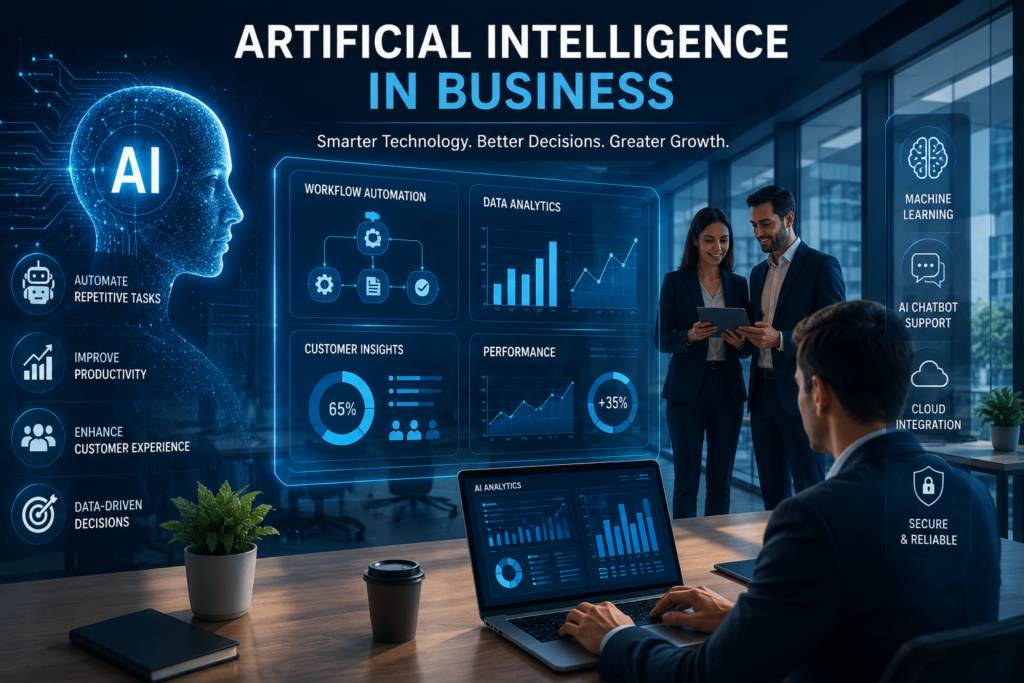
Currently, businesses across different sectors are utilizing AI to enhance efficiency and decision-making processes. For instance, in the retail industry, AI-driven algorithms analyze customer data to offer personalized shopping experiences, optimize inventory management, and streamline supply chains. In finance, AI technologies are employed for fraud detection, risk assessment, and automating trading processes, drastically reducing human error and increasing operational speed.
The healthcare sector has also witnessed significant integration of AI, with applications in predictive analytics for patient care, robotic surgeries, and automating administrative tasks, resulting in improved outcomes and reduced costs. Moreover, AI is serving as an invaluable resource in human resources through automated recruitment processes, performance analytics, and employee engagement evaluation.
As we delve deeper into the future of artificial intelligence in business operations, it is crucial to examine how ongoing advancements in AI technology will continue to reshape industries. This evaluation will include not only the benefits but also the challenges and ethical considerations that arise as organizations increasingly lean on AI. Thus, the importance of understanding both current implementations and future possibilities cannot be overstated in today’s rapidly evolving business landscape.
Current Trends in AI Adoption
Artificial Intelligence (AI) has rapidly evolved into a transformative force in various business sectors, leading to substantial changes in operations, decision-making, and customer engagement. Companies across retail, finance, manufacturing, and healthcare are increasingly adopting AI technologies to remain competitive and drive growth. One notable trend is the application of machine learning algorithms, which allow businesses to analyze vast amounts of data, streamline processes, and improve accuracy in predictions.
In the retail sector, AI has been instrumental in personalizing customer experiences. Retailers utilize natural language processing (NLP) to enhance their customer service through chatbots and virtual assistants, providing real-time assistance and support. Furthermore, predictive analytics powered by AI helps businesses tailor marketing strategies based on consumer behavior, enabling targeted promotions and inventory management.
The finance industry is witnessing a surge in the adoption of AI for risk assessment and fraud detection. Financial institutions are implementing AI-driven systems to analyze transaction patterns and identify anomalies, thus enhancing security and reducing losses. AI technologies also facilitate algorithmic trading, allowing for quicker, data-driven investment decisions that can respond to market changes in real-time.
In manufacturing, robotics combined with AI enhances operational efficiency by automating repetitive tasks and enabling predictive maintenance. Smart factories are emerging, where interconnected machinery uses AI to optimize production lines, minimize downtime, and reduce costs. This trend towards automation not only improves productivity but also supports better resource allocation.
Healthcare is yet another sector embracing AI technologies. AI is utilized for diagnostics, patient management, and drug discovery. Machine learning models help clinicians analyze medical imaging and patient data more effectively, leading to quicker diagnoses and tailored treatment plans. AI-enabled tools also assist in operational management, improving patient flow and resource utilization.
As businesses continue to integrate AI technologies into their operations, the potential for increased efficiency and improved decision-making becomes increasingly apparent. Organizations that strategically adopt AI will likely lead the way in their respective industries.
Benefits of AI in Business Operations
Artificial Intelligence (AI) has emerged as a transformative technology in business operations, offering a myriad of benefits that enhance productivity and operational efficiency. One of the primary advantages of integrating AI into business processes is the significant increase in productivity. Automating routine tasks allows employees to focus on more strategic initiatives, thereby optimizing their time and efforts. For instance, companies that have implemented AI-driven automation have reported a productivity increase of up to 40%, showcasing the effect of technology on workforce efficiency.
Another compelling benefit of AI in business operations is the enhancement of customer experience. AI-powered chatbots and virtual assistants are revolutionizing customer service by providing immediate assistance and support. Organizations employing these tools have seen a marked improvement in customer satisfaction ratings, often attributed to quicker response times and the ability to handle inquiries outside of regular business hours.
Cost reduction is also a significant advantage of AI implementation. By automating repetitive tasks and optimizing resource allocation, businesses can greatly reduce operational costs. A report by McKinsey highlights that companies leveraging AI technologies can potentially save millions in labor costs over time, leading to an overall improvement in profitability.
Moreover, AI greatly enhances data analysis capabilities. Through machine learning algorithms, businesses can analyze vast amounts of data to derive actionable insights. This capability allows organizations to make informed decisions based on real-time data analysis, predicting market trends, and consumer behavior more accurately. For instance, a retail company that uses AI analytics reported an increase in sales of over 20% due to better inventory management and targeted marketing strategies.
In conclusion, the integration of AI within business operations provides unparalleled advantages, from increased productivity and improved customer experiences to significant cost reductions and enhanced data analysis capabilities. Embracing these advancements is not just a trend but a step towards future-proofing business operations in an increasingly competitive landscape.
Challenges and Limitations of AI Integration
The integration of Artificial Intelligence (AI) into business operations presents numerous advantages; however, it is not devoid of significant challenges and limitations that organizations must navigate. A primary concern that businesses face is data privacy. The deployment of AI technologies necessitates the collection and analysis of vast amounts of data. Consequently, this raises crucial questions regarding the protection of sensitive information and compliance with regulations such as the General Data Protection Regulation (GDPR). Companies must ensure that their AI systems are designed with privacy safeguards, receiving explicit consent from users and minimizing data exposure.
Another pressing issue is the potential for job displacement. As AI technologies improve in efficiency and capability, there is a growing fear that many roles traditionally held by humans may become obsolete. While AI can automate routine tasks, the challenge lies in managing the human workforce that may be affected. Organizations must develop strategies for reskilling and upskilling employees to ensure that they can transition into new roles rather than being replaced.
Moreover, the successful implementation of AI requires skilled personnel who understand both the technology and its implications for the business. The demand for data scientists, machine learning experts, and AI specialists is on the rise, yet there remains a significant skills gap in the workforce. Companies are compelled to invest in training programs or hire external talent, which can strain their budgets and resources.
Lastly, maintaining ethical standards in AI applications presents an ongoing difficulty. As AI systems make decisions based on data algorithms, they may inadvertently perpetuate biases or lead to unfair outcomes. It is crucial for businesses to establish governance frameworks that ensure ethical considerations are embedded in their AI strategies, promoting transparency and accountability while mitigating risks to their reputation.
The Role of AI in Decision-Making
Artificial Intelligence (AI) is revolutionizing the landscape of decision-making within organizations. In today’s data-driven world, businesses generate vast amounts of information, which can be overwhelming for even the most experienced decision-makers. AI assists in this context by offering advanced data analysis techniques that enable organizations to transform raw data into actionable insights.
One of the core functionalities of AI in decision-making is its ability to analyze large datasets quickly and accurately. Traditional data analysis methods can be time-consuming, often leading to delays in critical business decisions. AI algorithms can process these datasets rapidly, identifying trends, correlations, and anomalies that human analysts might overlook. This capability empowers businesses to make faster, informed decisions, adapting to market changes and consumer needs more effectively.
Furthermore, predictive modeling is another essential aspect of AI in decision-making. AI systems leverage historical data to predict future outcomes, allowing organizations to proactively address potential challenges or capitalize on emerging opportunities. For instance, by analyzing purchasing patterns, AI can forecast inventory needs, thereby preventing overstock or stockouts. Such predictive insights are invaluable for strategic planning and operational efficiency.
Moreover, AI serves as a decision-support tool for managers and teams. By providing recommendations based on data-driven insights, AI enhances collaborative decision-making processes. For example, in a marketing department, AI tools can suggest targeted strategies based on consumer behavior data, allowing teams to refine their campaigns effectively. The integration of AI in decision-making not only streamlines operations but also enhances the overall quality of outcomes.
In conclusion, the role of AI in decision-making is integral to modern businesses. By providing advanced data analysis and predictive modeling, AI equips organizations with the knowledge required to make informed decisions that drive growth and innovation.
Future Trends: How AI will Shape Business Landscapes
The landscape of business operations is poised for significant transformation through advancements in artificial intelligence (AI). As technology continues to evolve, businesses are likely to experience enhanced capabilities that will revolutionize the way they operate. One major trend is the emergence of more sophisticated AI models that can analyze vast amounts of data with unprecedented accuracy. These models are expected to not only support decision-making processes but also to predict market trends, customer preferences, and operational efficiencies.
In addition to advancements in AI algorithms, we can anticipate a growing integration of AI in strategic roles within organizations. AI tools are being increasingly deployed in roles traditionally dominated by human analysts, such as market research, financial forecasting, and operational management. By leveraging AI, businesses can enhance their analytical capabilities, allowing for data-driven decision-making that results in more effective strategies. This trend will enable organizations to adapt more rapidly to changing market conditions and customer needs.
Moreover, AI has the potential to drive innovation across various sectors, creating new products and services that meet emerging demands. With AI continually learning from its environment, businesses can expect tailored solutions that address specific challenges. Automation powered by AI can also streamline processes, reduce operational costs, and minimize human error. As a result, organizations are likely to experience improved productivity and efficiency, fostering a culture of innovation that encourages experimentation and rapid iteration.
Ultimately, the symbiotic relationship between AI and business operations will shape the future landscape, enabling companies to harness new technologies for competitive advantage. By embracing these emerging trends, businesses can position themselves at the forefront of their industries, adopting strategies that not only respond to current market dynamics but also anticipate future opportunities.
AI and Customer Engagement Strategies
In recent years, artificial intelligence (AI) has emerged as a transformative force in customer engagement strategies. Businesses are increasingly turning to AI technologies to enhance their interactions with consumers, leading to improved satisfaction and loyalty. One of the most prominent applications of AI in this area is the use of chatbots. These automated systems provide immediate responses to customer inquiries, ensuring that potential issues are resolved promptly while allowing businesses to operate around the clock.
Chatbots are not just limited to addressing inquiries; they are also capable of gathering customer data and preferences. This information can be analyzed to tailor marketing strategies, thereby enhancing the overall customer experience. Personalized marketing, driven by AI, leverages this data to create targeted advertisements and recommendations, fostering a deeper connection between the brand and the consumer. For instance, AI algorithms can analyze browsing behavior, past purchases, and engagement patterns to recommend products or services that align closely with a customer’s interests.
Moreover, AI equips businesses with the tools necessary to segment their audience more effectively. By utilizing machine learning algorithms, companies can identify distinct customer groups and tailor their engagement strategies accordingly. This segmentation allows businesses to deliver relevant content at optimal times, thereby increasing conversion rates and building stronger relationships with customers.
Additionally, AI analytics can help companies monitor customer sentiments in real-time across various channels. By analyzing social media interactions and feedback, businesses can gain valuable insights into customer satisfaction and areas for improvement. Thus, by integrating AI into their customer engagement strategies, organizations can become more agile and responsive to the evolving needs of their clientele, ensuring sustained growth and competitiveness in the market.
Preparing Businesses for an AI-Driven Future
As businesses navigate the ever-evolving landscape shaped by artificial intelligence, it is imperative to prepare adequately for an AI-driven future. Successful integration of AI technologies demands a comprehensive strategy that encompasses skills development, cultural adaptations, and effective implementation techniques. First and foremost, acquiring the right skills is essential. Organizations should prioritize training programs aimed at enhancing employees’ proficiency in AI tools and data analysis. This can take the form of specialized workshops, online courses, or partnerships with academic institutions. Encouraging a culture of continuous learning not only helps develop technical skills but also fosters a mindset that embraces innovation.
In conjunction with skill enhancement, businesses must recognize that cultural shifts within the organization are necessary to fully leverage AI capabilities. This involves promoting a collaborative environment where employees feel empowered to share ideas and explore innovative solutions without the fear of failure. Management should advocate for a culture that values experimentation and adaptability, enabling teams to swiftly respond to changes and challenges presented by AI integration. Furthermore, acknowledging the ethical implications of AI is essential within this cultural framework, as transparency and fairness can build trust both internally and externally.
To implement AI solutions effectively, businesses should develop a clear roadmap that outlines goals, timelines, and necessary resources. Engaging stakeholders from various departments during the planning stage can ensure that the AI strategy aligns with the overall organizational objectives. Moreover, pilot projects can serve as a testing ground for AI initiatives, allowing businesses to assess the performance of these technologies in real-time and make data-driven adjustments. By taking these proactive steps, businesses can position themselves favorably in an AI-centric market, ultimately enhancing their operational efficacy and strategic direction.
Conclusion: Embracing AI for Sustainable Growth
The integration of artificial intelligence (AI) into business operations marks a transformative shift that has significant implications for future growth and sustainability. Throughout this discussion, we have examined various aspects of AI’s role in optimizing operational efficiency, improving customer experiences, and driving innovation. As businesses navigate an increasingly complex landscape, the adoption of AI technologies emerges not as an option but a necessity for staying competitive.
Businesses that embrace AI can leverage data-driven insights to enhance decision-making processes, streamline operations, and increase productivity. In addition, AI’s ability to personalize customer interactions offers companies a unique opportunity to foster stronger relationships and boost customer loyalty. These advantages underscore the importance of investing in AI solutions as a crucial part of a progressive business strategy.
However, it is also essential to acknowledge the challenges that accompany the implementation of artificial intelligence. Issues such as data privacy, ethical considerations, and the need for proper training of employees are critical aspects that cannot be overlooked. Addressing these challenges involves not only safeguarding data and ensuring compliance with regulations but also fostering an organizational culture that promotes continuous learning and adaptation.
In conclusion, organizations that recognize the dual nature of opportunities and challenges presented by AI will be better equipped to thrive in a highly dynamic business environment. By prioritizing a balanced approach to AI integration, companies can position themselves not only for immediate success but also for long-term sustainability. Ultimately, embracing artificial intelligence will pave the way for a future where businesses can innovate confidently and respond adeptly to the evolving market demands.