Understanding Automation: What It Is and Why It Matters for Small Businesses
Business automation refers to the use of technology to perform repetitive tasks or processes that would otherwise require human intervention. It encompasses various technologies and solutions designed to streamline operations, thereby enhancing efficiency and productivity. For small businesses, incorporating automation into daily operations can bring transformative benefits, particularly in areas such as workflow automation, marketing automation, and customer relationship management.
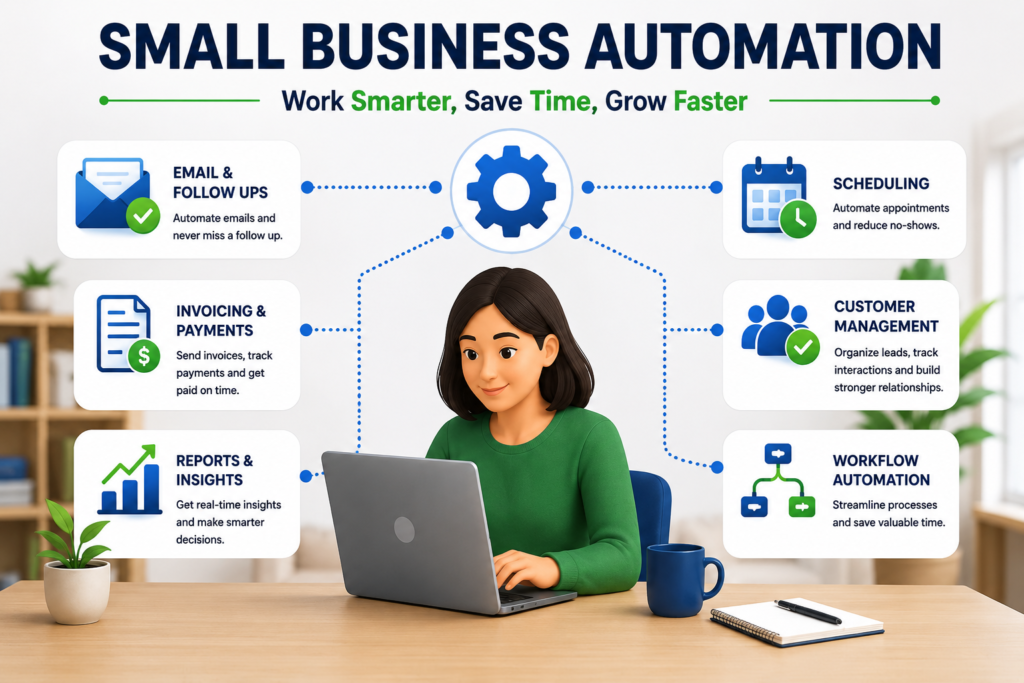
One primary reason small businesses should consider automation is the significant time savings it can provide. By automating routine tasks, employees can redirect their focus towards more strategic activities that drive growth and innovation. For instance, automating payroll processing or invoicing allows staff to allocate their time to enhancing customer service or developing new products. Consequently, this leads to increased overall productivity and improved job satisfaction among employees.
Additionally, automation plays a crucial role in reducing human error. Manual processes are prone to mistakes, which can be costly for small businesses that may not have the resources to absorb such errors. By implementing automation, businesses can ensure that tasks are completed consistently and accurately, which is particularly essential in areas like data entry and financial reporting.
The various aspects of automation—such as workflow automation and marketing automation—help small businesses optimize their operations. Workflow automation streamlines inter-departmental communication, ensuring that information flows smoothly, while marketing automation takes the burden off marketing teams by automating campaign management, lead generation, and customer segmentation. Furthermore, customer relationship management (CRM) software helps businesses manage interactions with current and potential clients more effectively.
In conclusion, understanding automation and its importance empowers small businesses to embrace technological advancements to improve their operations. By adopting these automation solutions, small business owners can foster growth, enhance productivity, and mitigate risks associated with human error.
Identifying Repetitive Tasks: The First Step in Automation
In the journey toward small business automation, the initial step involves identifying repetitive and time-consuming tasks that may hinder operational efficiency. Most businesses engage in various activities daily, many of which are performed repeatedly, often without much thought. Tasks such as data entry, invoicing, scheduling, and customer follow-ups are prime candidates for automation. These processes consume significant time and resources, making them ideal targets for improvement.
To effectively identify these tasks, business owners should undertake a comprehensive review of their daily operations. Begin by documenting all daily activities over a week or two, noting the time spent on each task. After this assessment, categorize tasks based on frequency and time investment. Areas that frequently consume time with minimal variation in execution are particularly suited for automation solutions.
In addition to direct observation, utilizing analytics tools can provide deeper insights into operational workflows. Tools like time tracking software can help reveal bottlenecks in processes, allowing for targeted identification of tasks that are inherently repetitive. For instances of data entry, consider how often similar information is inputted into systems. Similarly, invoicing processes can be standardized to ensure that repetitive invoice generation is streamlined, freeing personnel to focus on more value-added activities.
Furthermore, engaging employees in this evaluation process can yield valuable perspectives. Frontline workers often have firsthand insights into which tasks are burdensome or redundant in their daily work. Leveraging their feedback can not only pinpoint repetitive tasks but also foster a culture of innovation and efficiency within the organization. By effectively identifying these tasks, businesses can take meaningful steps toward automation, ultimately enhancing productivity and enabling a greater focus on strategic growth initiatives.
Assessing Your Business Needs: Determining Where to Start with Automation
When embarking on the journey of small business automation, it is crucial to accurately assess your specific business needs and priorities. This assessment enables you to identify which processes will benefit the most from automation, thus aligning your efforts with your overall business objectives.
One of the first factors to consider is your budget. Understanding the financial implications of automation is essential. While automation can yield significant time and cost savings in the long run, the initial investment may vary based on the complexity of the systems and tools you choose. Additionally, consider possible training costs for employees to ensure a smooth transition to automated processes.
Next, conducting a thorough workflow analysis will help you identify bottlenecks, redundancies, and operational challenges in your current processes. By closely examining which tasks consume the most time or resources, you can prioritize automation for those areas. For example, areas such as inventory management, invoice processing, or customer communications are often ripe for automation and can significantly enhance efficiency.
Moreover, the impact of automation on customer service is a critical consideration. Streamlining routine tasks through automated systems can free up your staff to focus on providing higher levels of service. Evaluate how automation tools could enhance customer interactions, such as through chatbots for immediate responses or automated email follow-ups to maintain engagement.
Ultimately, the goal of assessments is to establish a clear automation strategy that dovetails with your business goals. Careful evaluation of your needs, workflow efficiency, and customer service implications will serve as the foundation for successful small business automation.
Choosing the Right Automation Tools: Software and Applications for Your Business
In today’s fast-paced business environment, small enterprises are increasingly turning to automation tools to enhance efficiency and streamline processes. Selecting the right automation software is crucial, as it can significantly impact productivity and overall operation management. The landscape of automation tools is diverse, ranging from basic applications to sophisticated systems tailored to meet specific business needs.
When choosing automation software, it is essential to consider several criteria. First, assess the specific needs of your business. For instance, if your primary aim is to manage finances, accounting tools like QuickBooks or FreshBooks offer automated invoicing and expense tracking. For marketing tasks, platforms such as HubSpot and Mailchimp provide services ranging from email marketing to comprehensive customer relationship management, automating various outreach efforts.
Project management is another critical category where automation tools can make a significant difference. Applications like Trello and Asana help teams organize tasks with automated reminders and project updates, promoting collaboration and engagement. Each tool has unique features that cater to varying business scales and requirements, making it vital to evaluate these before making a selection.
Furthermore, integration capabilities are an essential consideration. The chosen software should seamlessly integrate with other systems already in use, reducing the complexity of managing multiple platforms. Additionally, consider the scalability of the tool to accommodate future growth, ensuring that the automation solution remains effective as the business evolves.
Ultimately, conducting appropriate research and comparisons among automation options enables small businesses to optimize their processes and enhance their operational efficiency effectively. By investing time in finding the right tools, businesses can focus on strategic growth rather than getting mired in day-to-day tasks.
Integrating Automation into Your Current Workflow: Best Practices
Incorporating automation tools into your existing workflow can significantly enhance operational efficiency and productivity. However, successful integration requires careful planning and execution. To begin with, it is crucial to conduct a thorough assessment of your current processes. Identifying repetitive and time-consuming tasks will help you pinpoint areas where automation can provide the most benefits. This initial step lays the groundwork for selecting the right tools tailored to your specific needs.
Once potential automation processes are identified, it’s important to choose the right technology that aligns with your organization’s goals and workflows. Opting for automation solutions that seamlessly integrate with your current software will minimize disruption and facilitate an easier transition. Additionally, consider cloud-based options that can offer flexibility and scalability as your business evolves.
Implementing automation requires not only technology but also the training of your staff. It is essential to provide comprehensive training sessions to ensure that employees are comfortable with the new systems and understand how to leverage them effectively. Developing user manuals and organizing workshops can enhance familiarity with the automation tools, which in turn fosters greater confidence and acceptance among team members.
Moreover, maintaining open lines of communication throughout the transition process is pivotal. Encourage feedback from employees using the new automation systems, as their input can provide valuable insights for further refinements. Conducting regular check-ins after implementation will help identify any challenges and enable timely adjustments to the workflow.
Lastly, implementing automation should be viewed as an ongoing process rather than a one-time endeavor. Continuously evaluating the effectiveness of the automated processes and exploring new tools can lead to sustained improvements. With the right strategies in place, integrating automation into your workflow not only enhances efficiency but also positions your small business for future growth.
Measuring the Impact of Automation: Metrics and KPIs to Track
In the context of small business automation, gauging the success of automation initiatives is crucial for justifying investments and refining strategies. Utilizing key performance indicators (KPIs) and relevant metrics allows businesses to evaluate how automation influences efficiency, cost-effectiveness, and customer engagement.
One of the primary metrics to consider is time savings, which entails assessing the reduction in the time required for various tasks following the implementation of automated systems. Businesses should track the amount of time saved per task, as this directly correlates to increased productivity. Automation often streamlines processes, thereby allowing employees to focus on higher-value tasks rather than repetitive manual work.
Moreover, cost reduction is another fundamental metric to monitor. By evaluating the overall costs associated with specific operations before and after automation, businesses can determine the financial impact of their technology investments. Savings can manifest in various ways, including labor costs, error reduction, and enhanced operational efficiencies, leading to an improved bottom line.
Improved customer satisfaction is a critical KPI that reflects the effectiveness of automation in enhancing user experiences. Businesses can deploy surveys and feedback mechanisms to quantify customer sentiment in relation to newly automated services. Metrics could include response times, service quality, and overall user satisfaction ratings. A consistent improvement in these areas often signifies a successful automation integration.
While these metrics provide a framework for assessing automation’s impact, it’s essential to track them over time to understand trends and make informed adjustments. By effectively measuring performance through these KPIs and metrics, small businesses can maximize the return on investment (ROI) from their automation efforts.
Overcoming Common Challenges in Automation Implementation
Implementing automation in small businesses can yield substantial benefits, however, several challenges may arise during the transition. One of the biggest hurdles is resistance to change among employees. Often, staff may fear that automation will threaten their job security or require them to adapt to new workflows and technologies. To address this, it is crucial to engage employees early in the process. Providing training sessions and clear communication about how automation can enhance their roles rather than replace them can foster a more accepting environment.
Budget constraints also play a significant role in automation implementation. Small businesses may find themselves grappling with limited financial resources, which can impede their ability to invest in new technologies or systems. Businesses should conduct a thorough cost-benefit analysis to identify high-impact areas for automation. Additionally, exploring affordable automation solutions, such as cloud-based software or open-source tools, can help businesses to make gradual investments while maximizing returns.
Technical difficulties can further complicate automation efforts, particularly when integrating new systems with existing ones. Businesses might face compatibility issues or lack the necessary in-house expertise. To mitigate these concerns, it is beneficial to collaborate with technology partners or consult with automation experts who can offer guidance on best practices. Furthermore, developing a phased approach to implementation can allow businesses to gradually optimize processes and troubleshoot problems as they arise.
Establishing strong lines of communication and ensuring stakeholder buy-in throughout the automation journey cannot be overlooked. Regular updates and soliciting feedback from team members not only helps in managing expectations but also fosters a collaborative culture that is essential for successful transformation. By proactively addressing these common challenges, small businesses can more effectively harness the power of automation to drive growth and efficiency.
Staying Updated: The Future of Automation in Small Business
In the ever-evolving landscape of business operations, automation technologies play a pivotal role in enhancing efficiency and productivity. Small businesses, in particular, must remain vigilant and informed about key emerging trends that could significantly impact their operations. Foremost among these trends are artificial intelligence (AI), machine learning, and robotic process automation (RPA). Each of these technologies offers distinct benefits and capabilities that can be harnessed to streamline processes, improve customer interactions, and provide valuable insights through data analysis.
Artificial intelligence, for instance, is transforming how small businesses engage with customers. By utilizing AI-driven chatbots and virtual assistants, these businesses can provide 24/7 customer support, ensuring that inquiries are addressed promptly. Additionally, AI algorithms can analyze consumer behavior, enabling businesses to tailor their marketing strategies effectively. As such, keeping abreast of developments in AI allows small business owners to leverage these tools for competitive advantage.
Similarly, machine learning is becoming increasingly accessible to small enterprises. This technology enables systems to learn from data, identifying patterns and predicting outcomes without human intervention. For small businesses, adopting machine learning can lead to improved decision-making, forecasting, and risk management. To benefit from these advancements, entrepreneurs should invest time in understanding how machine learning can be integrated into their existing frameworks.
Robotic process automation (RPA) also plays a crucial role in the future of small business automation. RPA tools can automate mundane, repetitive tasks, freeing up human resources for more strategic initiatives. By staying informed about RPA capabilities, small businesses can more effectively allocate their workforce, ultimately driving efficiency and reducing operational costs.
In summary, as technology continues to evolve, small businesses must prioritize staying updated on trends like AI, machine learning, and RPA. By actively engaging with these advancements, businesses can maintain a competitive edge and adapt to future innovations in the automation landscape.
Conclusion: Taking the Next Steps Towards Business Automation
As we have explored throughout this guide, the integration of automation into your small business processes can significantly enhance efficiency, reduce operational costs, and improve customer satisfaction. By leveraging automation tools and strategies, businesses can streamline repetitive tasks, allowing employees to focus on higher-value activities that drive growth and innovation.
In this journey towards business automation, it is essential to first assess your current processes and identify areas where automation can make a meaningful impact. Whether it is through automating customer relationship management (CRM), inventory management, or marketing campaigns, the potential for optimization is vast. Implementation should be approached methodically, starting with the most critical processes that will yield the most significant benefits.
The variety of automation tools available today makes it easier than ever for small businesses to integrate automation solutions tailored to their specific needs. From simple task automation to integrating complex systems, the technology has evolved to be more user-friendly and accessible. Reassessing your goals and aligning them with appropriate automation technologies will pave the way for a successful transition.
Moreover, the benefits of automation extend beyond mere time savings. By automating processes, businesses can achieve greater accuracy and consistency in their operations, minimizing errors that can lead to costly setbacks. Improved data collection and analysis can further enhance decision-making processes, enabling businesses to adapt to market changes more swiftly.
In conclusion, adopting business automation is not just an operational improvement; it is a strategic imperative that can position small businesses competitively in a rapidly evolving marketplace. As you move forward, consider your next steps with care and determination, knowing that the rewards of automation will not only streamline your operations but also empower your business to thrive in a dynamic environment. Embrace the journey of automation and unlock the full potential of your business today.