Understanding Digital Marketing
Digital marketing refers to the use of digital channels and technologies to promote products and services. This modern approach to marketing encompasses a wide range of components, including social media marketing, search engine optimization (SEO), email marketing, content marketing, and pay-per-click (PPC) advertising, among others. Each of these components plays a crucial role in enabling businesses to reach their audiences more effectively in a digitally-driven landscape.
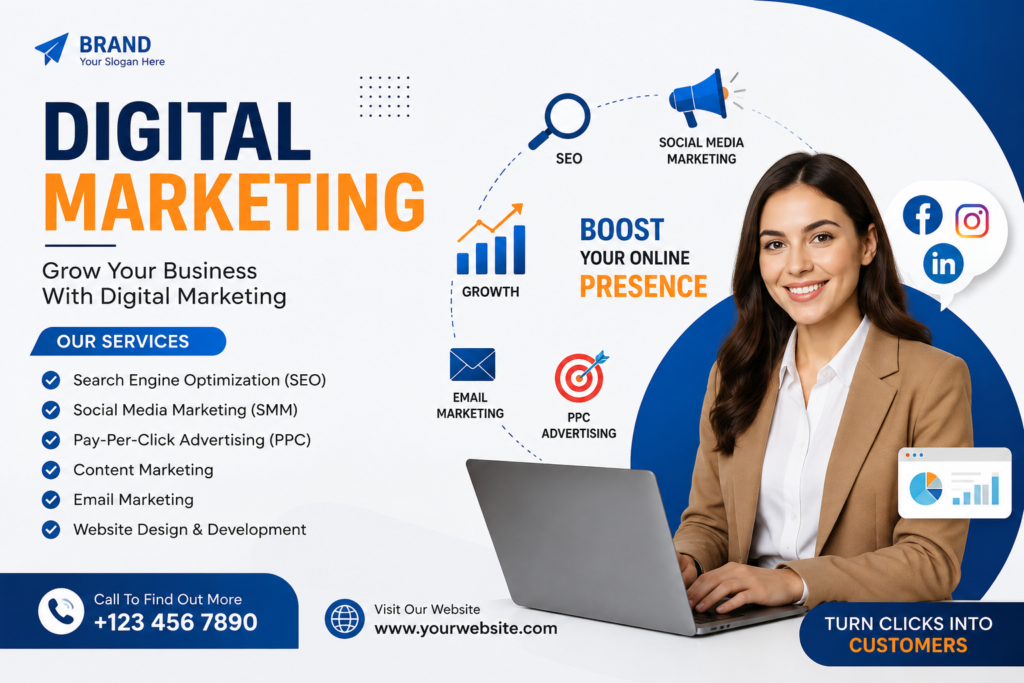
Social media marketing leverages platforms such as Facebook, Twitter, Instagram, and LinkedIn to engage and connect with potential customers. By creating and sharing content that resonates with users, businesses can enhance brand visibility and loyalty. SEO focuses on optimizing a website’s content to improve its position in search engine results, driving organic traffic and increasing the likelihood of conversions.
Email marketing remains a powerful tool for direct communication with customers, allowing businesses to deliver targeted messages and promotions. This form of marketing can significantly contribute to customer retention and engagement through personalized content. Content marketing, on the other hand, involves creating valuable information that attracts and retains audience attention, ultimately driving profitable customer action. This can be in the form of blogs, videos, infographics, or podcasts.
PPC advertising offers businesses an opportunity to gain immediate visibility on search engines and social platforms by paying for advertisements. This can lead to quick results, making it an attractive option for many companies looking to increase their reach. Distinct from traditional marketing, which often relies on print, radio, and television ads, digital marketing is more dynamic, measurable, and capable of reaching a global audience.
In today’s business landscape, the significance of digital marketing cannot be overstated. As more consumers turn to the internet for shopping and information, businesses must adopt digital marketing strategies to remain competitive and thrive in their respective industries.
Identifying Your Target Audience
Identifying the target audience constitutes a fundamental aspect of digital marketing strategies essential for modern businesses. Understanding who the customers are is key to tailoring marketing efforts effectively. Market research serves as a vital first step in this process. Businesses can utilize a variety of methods such as surveys, interviews, and focus groups to gather invaluable insights into customer preferences, needs, and behaviors. These tools can illuminate both demographic and psychographic aspects of the target market, enabling businesses to create relevant and engaging content.
Creating buyer personas is another significant practice in identifying the target audience. A buyer persona is a semi-fictional representation of an ideal customer based on market research and real data about existing customers. By developing detailed personas, businesses can better anticipate the motivations, goals, and challenges that their audience faces. This, in turn, informs how to engage effectively with them across various channels, enhancing both marketing and sales outcomes. Additionally, businesses should continuously refine these personas as new data becomes available, ensuring that their marketing strategies remain aligned with evolving consumer behavior.
Data analytics plays a crucial role in understanding the target audience. Modern analytics tools can provide businesses with comprehensive insights into user demographics, preferences, and online behaviors, allowing for a data-driven approach to audience identification. Metrics from social media platforms, websites, and email campaigns provide actionable data that businesses can use to segment their audience effectively. By interpreting this data, businesses can pinpoint both high-value audiences and potential markets that may have previously gone untapped. Ultimately, leveraging market research, developing buyer personas, and utilizing data analytics forms a cohesive approach in identifying and engaging with the target audience.
Creating a Strong Online Presence
In today’s digital landscape, establishing a robust online presence is crucial for businesses aiming to thrive and remain competitive. A strong online footprint not only enhances visibility but also engages potential customers effectively. The cornerstone of this presence typically revolves around having an optimized website. This entails ensuring that the site is not only visually appealing but also functions smoothly across various devices. Responsive design is vital, as it allows the website to adapt seamlessly to different screen sizes, improving the user experience.
Another significant factor in creating a strong online presence is the content that fills your website. Engaging, high-quality content tailored to the target audience fosters connections and encourages visitors to interact with the brand. This includes utilizing blogs, videos, and infographics to convey information while aligning with search engine optimization (SEO) practices. By incorporating relevant keywords naturally and ensuring that content remains informative, businesses can improve their search engine rankings, driving more traffic to their sites.
Effective branding strategies also play an essential role in establishing a strong online presence. A cohesive brand identity that resonates with the target market can be cultivated through consistent visuals and messaging across various channels, including social media platforms. Utilizing channels like Facebook, Instagram, and LinkedIn not only increases brand visibility but also provides an avenue for direct engagement with consumers, bolstering relationships and building trust. The use of social media analytics can inform businesses about customer preferences and behavior, allowing for targeted marketing efforts.
Thus, by focusing on these key elements—responsive design, captivating content, and a unified branding approach—businesses can create a formidable online presence that attracts and retains customers effectively.
Utilizing Content Marketing
In the realm of digital marketing strategies for modern businesses, content marketing emerges as a cornerstone for engaging target audiences. The objective of content marketing is to create valuable, relevant content that not only attracts but also retains customers. By consistently delivering informative materials, businesses can enhance their online presence, build brand loyalty, and ultimately drive profitable customer actions.
A variety of content types can be employed to captivate audiences. Blog posts, for instance, allow businesses to share knowledge, insights, and updates about their products or services. This format not only engages readers but also supports SEO efforts, ensuring that the content is discoverable through search engines. Videos represent another effective medium, appealing to a diverse demographic by providing entertaining and educational value. Additionally, infographics are particularly useful for conveying complex information in a visually appealing format, making data more digestible. Podcasts, on the other hand, cater to audiences who prefer auditory content, allowing them to consume information on-the-go.
To create content that resonates with target customers, businesses must first understand their audience’s interests, pain points, and preferences. Conducting thorough market research can aid in developing an effective content strategy, guiding the type of content to produce and the channels to use for distribution. Utilizing social media, email newsletters, and industry collaborations can amplify reach and engagement. Furthermore, it is essential to maintain a consistent brand voice across content forms, ensuring that all produced material aligns with the company’s values and messaging.
In essence, effective content marketing significantly contributes to enhancing digital marketing strategies. By focusing on diverse content types and meticulous audience understanding, businesses can foster stronger connections with their clients, ultimately resulting in lasting relationships and increased sales.
Search Engine Optimization (SEO) Basics
Search Engine Optimization, commonly referred to as SEO, is an essential component of digital marketing that focuses on increasing a website’s visibility on search engines. This process involves various techniques aimed at improving both the quality and quantity of website traffic. Businesses today must harness SEO strategies to ensure they rank higher in search engine results pages (SERPs), which is crucial for attracting potential customers.
SEO can be categorized into two primary types: on-page and off-page optimization. On-page SEO refers to tactics implemented directly on the website, such as optimizing web content, meta tags, and images. This includes the incorporation of relevant keywords. Conducting thorough keyword research is critical, as it helps identify terms and phrases that potential customers are using to search for products or services. Integrating these keywords strategically throughout the website enhances the opportunity for higher rankings in search results.
Off-page SEO, on the other hand, involves actions taken outside the actual website to improve its reputation and authority. This includes link building, social media marketing, and influencer outreach. When other reputable sites link back to a business’s website, it signals trust to search engines, thereby improving its ranking potential.
Additionally, modern SEO strategies must account for mobile optimization and local searches. As more users access the internet via mobile devices, ensuring that a website is mobile-friendly is imperative. Furthermore, local SEO helps businesses engage potential customers within their geographical area. By optimizing for local search queries, including location-based keywords, businesses can attract customers nearby, significantly enhancing their visibility in local markets.
Leveraging Social Media Strategies
In the realm of digital marketing, social media has evolved into an indispensable tool for modern businesses aiming to enhance their online presence and engage with their audience. The first step in leveraging social media strategies is selecting the right platforms that align with the business’s target demographic. Each social media channel, whether it be Facebook, Instagram, Twitter, or LinkedIn, caters to different audience segments and content types. Therefore, businesses must conduct thorough market research to determine where their potential customers are most active.
Once the platforms have been identified, the importance of community engagement cannot be overstated. Engaging with followers through comments, messages, and interactive content fosters a sense of community and builds trust. By responding to inquiries, addressing concerns, and highlighting user-generated content, businesses can enhance their brand loyalty and encourage more meaningful interactions. This can lead to better customer retention and potentially convert followers into long-term clients.
In addition to organic engagement, businesses can harness the power of paid advertising on social media. Social media platforms offer targeted advertising options that enable companies to reach specific demographics based on factors such as age, location, interests, and behaviors. This precision allows businesses to optimize their marketing budgets effectively. Paid ads can take various forms, including sponsored posts, stories, and video ads, each designed to capture the attention of users in a captivating manner.
To summarize, a well-rounded approach to leveraging social media strategies involves choosing the appropriate platforms, engaging with the community, and utilizing paid advertising for targeted outreach. By applying these strategies effectively, modern businesses can significantly improve their digital marketing efforts and ultimately drive growth.
Implementing Email Marketing Campaigns
Email marketing remains a powerful tool for modern businesses seeking to keep their customers engaged and informed. An effective email marketing campaign can not only promote products and services but also strengthen relationships with existing clientele. The first step in implementing successful email marketing is building a robust email list. This can be achieved through methods such as offering incentives like discounts or exclusive content, allowing users to sign up on your website, or leveraging social media channels to attract new subscribers.
Once a list is established, the next crucial aspect involves crafting compelling newsletters. These emails should not only be visually appealing but also contain relevant content that resonates with your audience. Clear subject lines, informative content, and a strong call-to-action are essential elements that contribute to higher open and click-through rates. Furthermore, utilizing responsive designs ensures that your emails are readable across various devices, catering to the growing mobile user base.
Personalization plays a significant role in enhancing the effectiveness of email marketing campaigns. By segmenting your audience based on their preferences, interests, or past interactions, you can tailor your messages to suit specific groups. Personalized emails are known to yield better conversion rates as they create a more relevant experience for the recipient. Additionally, implementing A/B testing can provide valuable insights into what types of content and formats resonate best, allowing continuous optimization of your email strategies.
Through these approaches, businesses can leverage email marketing not just as a means of communication but as a strategic tool that drives engagement, nurtures relationships, and ultimately increases conversion rates.
Analyzing and Measuring Results
In the realm of digital marketing, the importance of tracking and measuring performance cannot be overstated. Analyzing and measuring results allows businesses to evaluate the effectiveness of their marketing strategies, enabling them to make informed decisions for future campaigns. This process involves utilizing various tools and metrics that focus on different aspects of digital marketing, such as engagement, conversion rates, and return on investment (ROI).
One of the essential tools for measuring digital marketing performance is web analytics software like Google Analytics. This platform provides insights into website traffic, user behavior, and audience demographics, which help businesses understand how their digital content is performing. For instance, metrics such as page views, bounce rates, and time-on-page can provide valuable information about the content that resonates with users and those that need improvement.
Conversion rates are another crucial metric that businesses should measure. This indicates the percentage of visitors who take a desired action, such as making a purchase or signing up for a newsletter. A low conversion rate may suggest the need to reassess various elements of the marketing strategy, such as landing page design or targeting options, to improve performance.
Return on investment (ROI) is perhaps the most critical metric, as it quantifies the profitability of marketing efforts. Calculating ROI helps businesses determine whether they are gaining sufficient returns relative to their investments in digital marketing channels. By analyzing ROI alongside other metrics, businesses can identify underperforming campaigns or allocate resources more effectively.
Ultimately, data-driven decision-making is vital for optimizing digital marketing strategies. By continually measuring and analyzing results, businesses can adapt their approach, enhance customer engagement, and improve their overall online presence, ensuring long-term success in the ever-evolving digital landscape.
Staying Ahead of Digital Marketing Trends
As the digital marketing landscape continues to evolve, businesses must remain vigilant in adapting their strategies to meet the latest trends. One prominent trend reshaping this landscape is the adoption of Artificial Intelligence (AI). AI technologies enhance data analysis and personalize customer experiences, leading to more effective marketing campaigns. Tools powered by AI can analyze consumer behavior patterns, predict future preferences, and enable businesses to deliver highly targeted content to their audience.
In addition to AI, significant changes in consumer behavior are influencing digital marketing strategies. Today’s consumers are more informed and connected than ever before, relying heavily on social media and online reviews to guide their purchasing decisions. This shift has led to the emergence of new platforms and marketing channels that businesses must utilize. Companies that actively engage with their audience through social media channels and utilize user-generated content can elevate their brand and foster trust among potential customers.
Furthermore, evolving technologies such as augmented reality (AR) and virtual reality (VR) present unique opportunities for marketing innovation. By integrating these immersive technologies into their campaigns, businesses can offer engaging experiences that captivate their audience. For instance, brands can leverage AR to allow customers to visualize products in their space before making a purchase, providing an interactive shopping experience.
To maintain a competitive edge in the digital marketplace, businesses must be adaptable and innovative. This involves regularly assessing their marketing strategies and being open to incorporating new technologies and trends. By staying informed about emerging digital marketing trends, businesses can position themselves advantageously, ensuring that they meet the evolving expectations of their target audience.