
Introduction to AI-Powered Lead Generation
AI-Powered lead Generation is a smart way to grow your business. AI powered lead generation has revolutionized various industries, and its impact on lead generation is profound. AI-powered lead generation refers to the techniques and tools that leverage artificial intelligence to identify, attract, and engage potential customers. By utilizing advanced algorithms and machine learning, businesses can automate parts of the lead generation process while gaining insights that were previously unattainable.
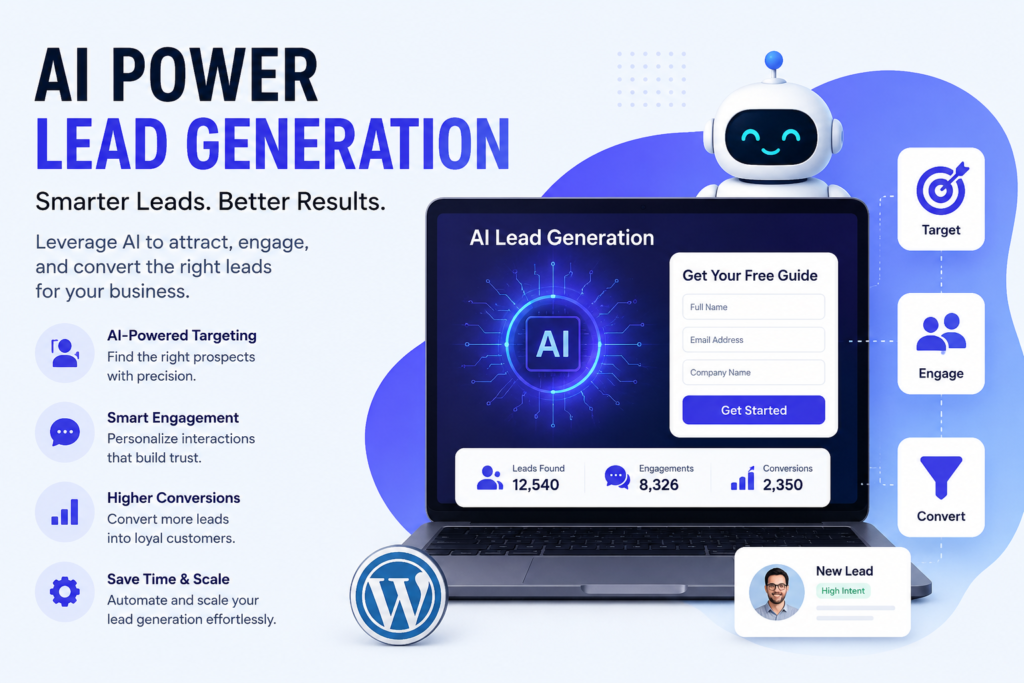
The adoption of AI in lead generation is increasingly important in today’s competitive marketplace. Traditional methods, while still valid, often fall short in terms of efficiency and effectiveness. AI offers a solution by analyzing large volumes of data to recognize patterns and predict customer behavior, thus streamlining the sales funnel. This technology can assist businesses in targeting specific demographics, thereby enhancing their outreach efforts.
Moreover, with AI-driven tools, companies can personalize their marketing strategies based on real-time data analysis. Personalization increases the likelihood of converting leads into customers, as tailored content resonates more with prospective buyers. For example, AI can recommend products or services based on a user’s browsing history or previous purchases, which not only improves user experience but also drives sales.
Additionally, AI can automate routine tasks such as email follow-ups and data entry, allowing sales teams to focus on strategic activities. As AI continues to evolve, its ability to enhance customer acquisition processes becomes even more significant. Through predictive analytics and customer segmentation, businesses are equipped to create highly targeted marketing campaigns, which ultimately leads to more qualified leads and increased revenue.
The Importance of Lead Generation in Business Growth
Lead generation is a critical component of any successful business strategy. It involves the process of identifying and nurturing potential customers for a company’s products or services. By effectively generating leads, businesses can significantly enhance their growth trajectory and establish a robust customer base. In today’s competitive market, having a focused lead generation strategy is essential for identifying individuals or businesses that exhibit a genuine interest in what your company offers.
One of the most significant benefits of strong lead generation is the increased sales opportunities it creates. When a business effectively generates leads, it can target its marketing efforts towards the most promising prospects, thereby enhancing the likelihood of conversion. This approach not only optimizes the sales process but also ensures that marketing resources are allocated towards leads that have a higher probability of resulting in sales, ultimately leading to increased revenue.
Moreover, effective lead generation practices are critical for improving return on investment (ROI). By focusing on generating quality leads rather than a high volume of unqualified contacts, businesses can maximize their marketing efforts. Using data-driven strategies, such as AI-powered tools, companies can analyze and refine their lead generation processes, leading to improved efficiency and higher returns. In an era where every marketing dollar counts, prioritizing lead generation can dramatically influence a company’s bottom line and overall success.
In summary, lead generation plays a vital role in driving business growth. By identifying potential customers and creating opportunities for sales, businesses can enhance their overall performance. Investing in effective lead generation strategies not only improves sales and ROI but also supports sustainable growth in an ever-evolving marketplace.
How AI is Transforming Lead Generation
Artificial Intelligence (AI) is reshaping the landscape of lead generation by introducing advanced technologies that enhance efficiency, accuracy, and personalization. Among these technologies, machine learning plays a pivotal role by enabling systems to analyze vast datasets and glean insights that were previously unattainable. By recognizing patterns in consumer behavior and preferences, machine learning algorithms can identify potential leads that align closely with an organization’s target market.
Natural Language Processing (NLP) is another transformative technology within the realm of lead generation. NLP allows machines to understand and interpret human language, making it feasible to automate customer interactions seamlessly. Businesses can deploy chatbots to engage visitors on their websites, answering queries in real-time and collecting the necessary information to qualify leads. This not only streamlines the lead generation process but also enhances the user experience and increases conversion rates. Additionally, NLP can be utilized to analyze customer sentiments across various communication channels, providing organizations with deeper insights into their prospects’ needs and motivations.
Another significant advancement in the field of lead generation is predictive analytics. This technology leverages historical data and models to forecast future outcomes effectively. In the context of lead generation, businesses can utilize predictive analytics to identify which leads are most likely to convert, optimizing their sales efforts accordingly. By targeting high-potential leads, companies can allocate resources more judiciously, leading to improved performance and higher return on investment in their marketing strategies.
In conclusion, the integration of AI technologies such as machine learning, natural language processing, and predictive analytics fundamentally alters how businesses approach lead generation. By streamlining processes and enhancing decision-making capabilities, AI presents innovative solutions for organizations seeking to improve their lead generation efforts.
Benefits of AI-Powered Lead Generation
AI-powered lead generation offers a multitude of benefits that can significantly enhance the operational efficiency of businesses. One of the primary advantages is increased efficiency; AI solutions streamline the process of identifying and nurturing leads, allowing businesses to focus their resources on converting prospects into customers. By automating repetitive tasks, such as data entry and initial outreach, companies can use their human capital more effectively, reducing operational costs and shortening the sales cycle.
Another noteworthy benefit is improved data analysis. AI systems can sift through vast amounts of data to uncover patterns and trends that escape human analysts. This capability not only helps in predicting consumer behavior but also provides insights that can refine marketing strategies. Businesses can leverage this data to create more targeted campaigns, enhancing engagement and conversion rates.
Additionally, personalized marketing becomes feasible with AI-powered lead generation. By analyzing customer preferences and interactions, AI systems can tailor content and recommendations to individual users. This level of personalization fosters a stronger connection between the brand and its audience, enhancing customer satisfaction and loyalty over time.
Furthermore, better targeting of potential clients is made possible by AI’s predictive algorithms. These systems can identify the ideal customer profiles by analyzing historical data, ensuring that resources are directed towards leads most likely to convert. This targeted approach removes much of the guesswork traditionally involved in lead generation, ultimately leading to more informed decision-making and optimized sales strategies.
In conclusion, integrating AI-powered lead generation into business operations not only maximizes efficiency but also enables companies to effectively analyze data, personalize marketing efforts, and better target prospective clients. These benefits collectively contribute to healthier growth and improved profitability in the competitive market landscape.
Challenges and Considerations in AI Lead Generation
While the integration of AI-powered lead generation presents numerous advantages for businesses, it is not without its challenges. One of the primary concerns revolves around data privacy. Businesses must navigate the complex landscape of data protection regulations, such as the General Data Protection Regulation (GDPR) in Europe and the California Consumer Privacy Act (CCPA) in the United States. These laws impose strict guidelines on how personal data can be collected, stored, and used. Implementing AI systems that leverage customer data requires a robust understanding of these regulations to ensure compliance and avoid hefty fines.
Another significant challenge is technology integration. Many businesses already utilize various software and systems for customer relationship management (CRM) and marketing automation. Introducing AI tools necessitates seamless integration with existing platforms to ensure smooth operation and maximize the benefits of lead generation. Failure to appropriately merge these technologies can lead to inefficiencies and a fragmented user experience, ultimately hindering the potential of AI-driven strategies.
Furthermore, the effective management of AI tools requires skilled personnel. The technical expertise needed to operate and analyze AI systems is not always readily available. Companies may face a skills gap that complicates the implementation of AI in their lead generation efforts. Hiring or training staff who are proficient in AI technologies is essential to fully leverage the capabilities of these tools. Organizations must invest in ongoing training and development to ensure their workforce can manage and optimize AI technologies effectively.
In summary, while integrating AI into lead generation presents significant opportunities for growth, businesses must remain cognizant of challenges such as data privacy, technology integration, and the need for skilled personnel. Addressing these considerations will be crucial for achieving successful outcomes in AI-powered lead generation initiatives.
Implementing AI-Powered Lead Generation Strategies
The integration of AI in lead generation strategies presents a transformative opportunity for businesses to enhance their outreach efforts and drive sales growth. To implement AI-powered lead generation strategies effectively, organizations should begin by carefully assessing their specific needs and objectives. This initial evaluation will assist in selecting the most appropriate AI tools and technologies that align with their business goals.
It is vital for businesses to define clear processes that incorporate AI into their existing lead generation framework. A well-structured approach may involve the identification of target audiences, automating data collection, and segmenting leads based on behavior and preferences. With AI capabilities, businesses can analyze vast amounts of data to identify patterns, enabling more efficient targeting of potential customers.
Another critical step is the selection of suitable AI tools. The market offers various options, ranging from predictive analytics for forecasting lead behavior to chatbots for engaging visitors in real-time. Companies should consider aspects such as ease of integration, scalability, cost, and support when evaluating AI technology. For example, using AI-driven CRM systems can streamline processes and provide insights into lead interactions, ultimately fostering better customer relationships.
Moreover, businesses must ensure that their teams are well-equipped to harness the power of these AI solutions. This can involve training staff in the utilization of new tools as well as encouraging a culture of data-driven decision-making. By aligning AI capabilities with their overall business objectives, companies can maximize the effectiveness of their lead generation efforts.
In essence, implementing AI-powered lead generation strategies requires a cohesive approach encompassing tool selection, process definition, and team readiness. Through these deliberate steps, organizations can not only optimize their lead generation but also accelerate their growth trajectory in an increasingly competitive landscape.
Case Studies of Successful AI-Powered Lead Generation
Artificial Intelligence (AI) has revolutionized the approach to lead generation for businesses across various sectors. One prominent example is the success story of an e-commerce company, which implemented an AI-driven recommendation engine. This system analyzed customer behavior patterns and preferences by examining browsing history, purchase history, and social media interactions. By utilizing these data points, the company was able to tailor marketing messages and product suggestions for individual users, which significantly increased engagement rates and ultimately resulted in a 30% uplift in sales within six months.
Another illustrative case is found within the real estate industry. A prominent agency integrated AI chatbots into their website to address potential clients’ inquiries 24/7. These chatbots utilized natural language processing to understand user questions effectively and provide insightful responses without human intervention. As a result, the agency saw a dramatic increase in qualified leads. The ability for potential buyers to have their questions answered immediately and receive nuanced information about properties led to a 40% growth in their lead conversion rate.
Furthermore, a B2B software provider harnessed the power of AI algorithms to analyze prospects’ online behavior and predict the likelihood of conversion. By aligning their sales efforts with AI-generated insights, the company optimized outreach tactics, targeting those most likely to engage based on predictive analytics. This strategy not only accelerated their customer acquisition process but also improved their sales team’s efficiency, resulting in a remarkable 50% increase in leads generated over the span of one year.
These case studies exemplify the tangible benefits of employing AI-powered lead generation strategies in different business environments. The innovative application of technology can drive significant growth while transforming traditional sales methodologies, proving that AI is indeed a smart way to grow any business.
Best Tools and Technologies for AI Lead Generation
In the modern business landscape, utilizing AI-powered lead generation tools is becoming essential for maintaining a competitive edge. Several innovative technologies are available that assist organizations in streamlining their lead generation efforts. Here are some of the leading tools, highlighting their features, pricing, and the benefits they offer.
One prominent tool is HubSpot, which integrates AI algorithms to enhance lead scoring and segmentation. HubSpot offers features such as predictive lead scoring, automation of marketing workflows, and seamless integration with CRM systems. Its pricing model is tiered, catering to small businesses with basic needs and larger enterprises requiring advanced features. This flexibility allows companies to adopt the platform at their own pace while reaping benefits like elevated engagement rates and optimized customer journeys.
Another noteworthy option is Salesforce Einstein, which incorporates AI into the Salesforce ecosystem. This tool provides advanced analytics and personalized recommendations, helping businesses prioritize leads based on predicted sales outcomes. The pricing of Salesforce Einstein varies depending on the existing Salesforce subscription but typically involves an additional monthly per-user fee. By adopting this solution, organizations can expect to see improved conversion rates driven by its robust data insights.
Additionally, LinkedIn Sales Navigator employs AI to assist sales professionals in identifying potential leads directly from their networks. Its powerful search filters help users tailor their search criteria based on specific account needs. The platform operates on a monthly subscription basis, allowing for budget flexibility. Businesses leveraging LinkedIn Sales Navigator can expect heightened lead engagement as it draws on social selling techniques, enabling users to forge genuine connections.
Incorporating these leading tools into their processes allows businesses to harness the power of AI for lead generation effectively. Each of these solutions provides unique features and pricing models that cater to varying business needs, facilitating a smoother transition to automated lead generation.
Future Trends in AI-Powered Lead Generation
As we look to the future, AI-powered lead generation is expected to evolve substantially, driven by emerging technologies and changing market dynamics. The synergy between artificial intelligence and the growing volume of data will facilitate more refined consumer insights and enhance predictive analytics. Businesses are anticipated to leverage these insights to create more personalized customer experiences through tailored marketing strategies. This shift towards hyper-personalization will likely lead to higher conversion rates, thereby making AI-driven lead generation a critical component of future marketing campaigns.
Furthermore, advancements in machine learning algorithms will enable systems to better interpret user behavior and preferences. These systems will not only gather data but will also analyze patterns to predict future buying behaviors. As algorithms become more sophisticated, AI could identify potential leads even before they exhibit clear intent, which would revolutionize the way businesses engage with prospects.
Additionally, the growing popularity of omnichannel marketing will necessitate the integration of AI tools across various platforms, allowing for a unified approach to lead generation. This integration will also help in refining the customer journey, as AI can seamlessly track and analyze interactions across multiple touchpoints. Moreover, as brands prioritize customer experience, we may see a decrease in intrusive marketing practices and an increase in genuine engagement driven by data-backed insights.
The potential for AI-powered lead generation is also linked to evolving consumer behavior. As customers become more educated and discerning, they expect brands to not only understand their needs but also anticipate them. Businesses will need to adopt AI technologies that facilitate proactive engagement, ensuring that they deliver the right content to the right audience, at the right time. This will likely lead to a competitive advantage for companies that can quickly adapt to these changing dynamics.
In conclusion, the landscape of AI-powered lead generation is poised for dramatic advancements. By staying abreast of emerging technologies and consumer preferences, businesses can harness the full potential of AI to drive growth and success in their lead generation efforts.